Bulk Material Handling 101: The Essential Guide for Industrial Operations
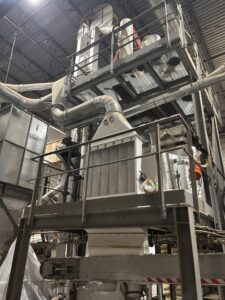
Bulk material handling is a critical part of every industrial operation, ensuring materials like grain, aggregates, powders, pellets, and scrap move safely through a facility. Well designed bulk material handling systems, such as conveyors, bins, hoppers, feeders, and dust control equipment directly influence productivity, safety, and overall plant performance. When material flow is optimized, companies reduce downtime, prevent bottlenecks, and extend equipment life. However, when systems are undersized, worn, or poorly designed, issues such as bridging, spillage, dust, and inconsistent throughput can quickly disrupt production. This guide introduces the fundamentals of bulk material handling, explains how key equipment works, and highlights best practices that help industrial operations improve reliability and maximize material flow.
What is Bulk Material Handling and Why It Matters
Bulk material handling is the science and engineering of moving, storing, metering, and processing unpackaged materials like grains, pellets, powders, aggregates, and scrap at scale. Done right, it reduces bottlenecks, spillage, dust, equipment wear, and unplanned downtime, while improving throughput, worker safety, and overall productivity.
Typical Use Cases
- Receiving and unloading trucks/rail
- Internal transfers between processing stages
- Storage (bins and hoppers)
- Metered feeding to dryers, mixers, mills, screens, or baggers
- Load-out to bulk or packaged shipping
Know Your Material: Characteristics Drive Design
Every good system starts with the material’s properties. These directly influence equipment selection, geometry, wear protection, and controls.
- Particle size & shape: powders vs. pellets vs. granules vs. coarse aggregates
- Bulk density: impacts horsepower and structural design
- Flowability: free flowing vs. cohesive; prone to bridging, ratholing or segregation
- Abrasiveness & corrosiveness: dictates liners, alloys, and maintenance intervals
- Moisture & hygroscopicity: caking risk, need for aeration or drying
- Temperature & combustibility: impacts dust control, explosion protection, and sealing
Core Equipment: The Workhorses of Bulk Handling
Mechanical Conveyance
- Belt conveyors: high capacity, long runs, gentle on product; ideal for grains and aggregates
- Screw conveyors: compact, enclosed; good for short runs and metering. It’s important to watch for wear with abrasive materials.
- Drag/chain conveyors: enclosed, low dust, robust for cereals and pellets
- Bucket elevators: vertical lifting at high capacities; careful attention to boot cleaning and belt tracking
- Roller/chain conveyors (unit handling): for totes and pallets adjacent to bulk operations
Storage and Containment
- Bins: design for mass flow when possible to minimize stagnation and spoilage
- Hoppers: geometry (wall angle, outlet shape) determines flow; add flow aids if necessary
- Domes/buildings: bulk storage for aggregates and salt; require reclaim strategies
Feeding and Metering
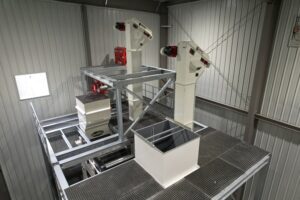
- Vibratory feeders: precise control for fragile or tricky materials
- Rotary airlocks: maintain differential pressure in pneumatic systems while metering solids
- Weight belts & loss-in-weight feeders: for recipe accuracy and process control
Conditioning and Processing
- Dryers (ex. Grain dryers): moisture control for quality and storability
- Screens/sifters: remove fines or overs
- Crushers/mills/mixers: size reduction and blending. There is a need to consider wear parts and dust containment
Receiving and Load Out
- Truck/rail receiving pits: designed for surge and dust capture
- Spouts & chutes: telescoping or dust-tight spouts minimize spillage and emissions
- Scale systems: truck scales, belt scales, hopper scales for custody transfer and QA.
Design Principles That Prevent Headaches
- Design for flow: target mass flow in bins (steeper walls, smooth liners, proper outlet geometry) to reduce bridging and ratholing.
- Right-size capacity: align conveying rates, storage volumes, and equipment runtimes to avoid bottlenecks and idle assets.
- Protect against wear: use abrasion-resistant liners and replaceable wear components.
- Control dust and spillage: enclosure, skirt boards, proper transitions, dust collection, and housekeeping plans.
- Plan access and maintenance: guards, platforms, safe pull-cords, inspection doors, cleanouts, and hoisting points.
- Integrate controls early: instrumentation and PLC logic should be designed with process sequences, interlocks, and safety functions from the outset.
Safety Essentials
- Machine guarding and LOTO: guard pinch points and rotating parts; enforce lockout/tagout during maintenance.
- Fall protection and confined spaces: safe access to bins, elevators, and pits; entry permits, rescue plans.
- Combustible dust management: hazard assessment, housekeeping, dust collection, explosion protection (venting/suppression) where applicable.
- Material hazards: corrosive or toxic dusts require appropriate PPE, containment, and monitoring.
- Training and procedures: startup/shutdown checklists, emergency stop testing, and regular safety drills.
Automation, Instrumentation and SCADA
Smart systems improve uptime, quality, and energy use:
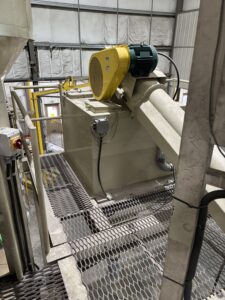
- Sensors: level (continuous and point), load cells, belt scales, flow meters, speed and vibration monitoring.
- Controls: PLCs with interlock, permissives, and recipe management.
- SCADA/HMI: real-time dashboards, alarms, trends, remote access.
- Predictive maintenance: vibration/temperature analytics for bearings, drives, and bucket elevator belts.
- Energy optimization: variable frequency drives (VFDs), demand control, and sequencing logic.
Common Problems and Practical Fixes
- Bridging/ratholing: adjust hopper angles, increase outlet size, add flow aids (vibrators, air cannons, liners, bin activators).
- Excessive wear: upgrade liners and flight materials; optimize speed and reduce unnecessary drops.
- Dust/spillage: improve sealing, install dust collection at transfer points, revise chute geometry.
- Misalignment & tracking: check pulley alignment, tensioning, and belt condition; use training idlers.
- Corrosion and contamination: select compatible materials, add covers/enclosures, improve housekeeping.
- Cold-weather issues: heat tracing, dehumidification, enclosure, and winter operating.
Best Practices for Throughput and Reliability
- Holistic layouts: design transfers to minimize drops and sharp changes in direction.
- Standardize components: reduce spare parts complexity and speed up repairs
- Routine inspections: daily walk-arounds, weekly lubrication, monthly alignment checks.
- Calibration cadence: scales, feeders, and sensors on a defined scheduled, with records.
- Shutdown planning: planned maintenance windows with scope, parts kits, and pre-start functional tests.
- Continuous improvement: log downtime events, perform root-cause analysis, and update SOPs.
When to Call a Specialist
Bring in experts when you’re:
- Planning expansions or new lines.
- Experiencing chronic flow problems or frequent wear failures.
- Integrating automation or upgrading controls.
- Implementing dust and explosion risk controls.
- Scheduling annual shutdowns and maintenance packages
Contact Us
 ACi supports end-to-end bulk handing, from design and fabrication to installation, controls, and planned maintenance. If you’re facing throughput, safety, or reliability challenges, we can help diagnose, design, and implement improvements. Contact a team member today by calling 519 759 5880 (Brantford Office), or 613 652 1010 (Brinston Office), email sales@aci-industrial.com, or fill out the contact form below.